
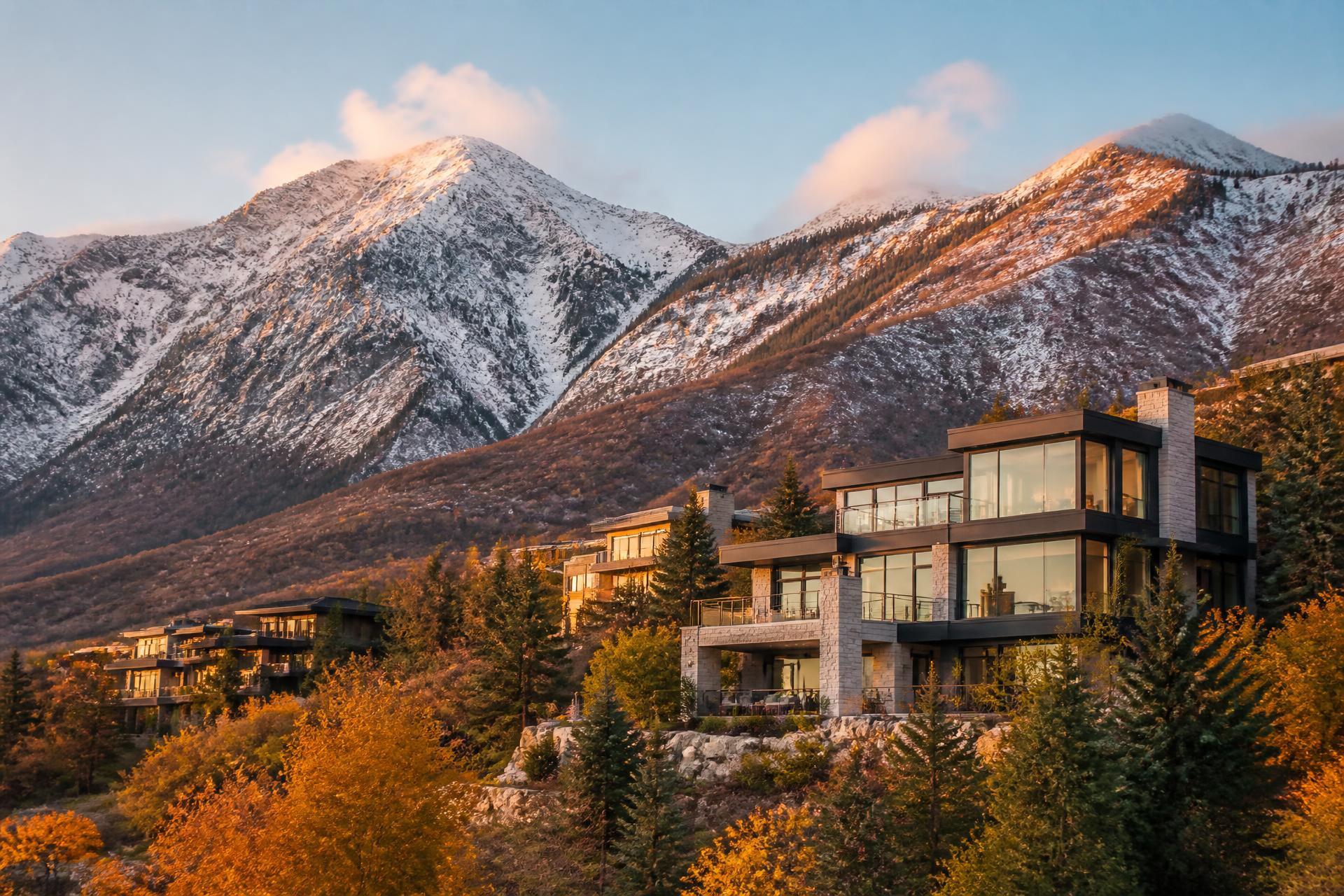
Cottonwood Heights Is Running Out of Land: What That Means for Owners and Investors
Cottonwood Heights has an advantage that cannot be copied, engineered, or annexed. Big and Little Cottonwood Canyons begin at its edge. Every year the resorts at the top of those canyons get more expensive, more visited, and harder to reach, and every year the homes at the bottom of them get more strategically valuable. That is not a trend, it is geography.
Layer on a second fact. Cottonwood Heights is almost fully built out, and the land that remains is hillside, which is the most expensive and most constrained land to develop. The result is a market where supply barely moves and demand keeps arriving from two directions at once, families who want the schools and the location, and buyers who want to be fifteen minutes from a chairlift without paying Park City prices.
Why is canyon proximity such a durable value driver?
Because it is the one amenity that cannot be built somewhere else. A developer can add a clubhouse, a trail system, or a pool to any subdivision in the valley. Nobody can add a canyon. As access to the Cottonwoods becomes more managed and more congested, living at the mouth of them stops being a convenience and starts being a genuine scarcity position.
This changes what a home in Cottonwood Heights needs to do. The houses that hold and grow value here are the ones designed around how the location actually gets used. A real transition space at the entry that handles wet gear, boots, and equipment. Garage bays sized for the way mountain households actually store things. Radiant heat where snow gets tracked in. Outdoor living that works in October and April, not only in July.
Most of the existing housing stock was designed for a valley suburb and happens to sit near a canyon. The upgrade opportunity is to build homes that are designed for the canyon and happen to sit in a suburb.
What makes hillside lots more expensive to build on?
Slope changes the cost structure of a project before a single wall goes up. Excavation, retaining, foundation stepping, drainage, and access all scale with grade, and those costs are largely invisible in the finished house. An owner spends real money on work nobody will ever see, which is precisely why hillside projects need to be priced honestly at the design stage rather than discovered in the field.
Wind and weather add another layer. Canyon exposure means higher wind loads, faster material fatigue on exterior finishes, and snow that behaves differently than it does two miles west. Roof geometry, deck framing, railing detail, and exterior material selection all have to be resolved with that exposure in mind. A deck detailed for a valley backyard will not age well on a Cottonwood Heights hillside. Our guide to what a custom deck costs in Utah covers how that exposure shows up in the numbers.
The upside is that slope produces homes that flat land cannot. Stepped levels, walkout lower floors that are genuinely daylit, and view corridors that open in more than one direction. Handled well, the constraint becomes the architecture.
Is a remodel here a better investment than a move?
For a lot of Cottonwood Heights owners, yes, and the reason is simple. The thing they cannot replace is the address. Selling to buy a newer home almost always means moving away from the canyons, away from the elevation, or away from the lot size. The transaction costs are real, the replacement is usually a compromise, and the money that would have been lost in friction could have been spent on the house instead.
The highest-return moves we see repeatedly on this side of the valley are opening the view elevation with proper glass, adding covered and heated outdoor living so the shoulder seasons become usable, converting an underbuilt lower level into real living space, and rebuilding the entry and mudroom sequence around how a mountain-adjacent household actually functions.
For the practical construction detail behind those moves, our Cottonwood Heights building guide goes deeper into site conditions and sequencing.
What does the next decade look like here?
Two forces point the same direction. Buildable land continues to shrink, and canyon access continues to become more valuable and more contested. Neither of those reverses on any timeline worth planning around. The practical implication is that improvements made to a Cottonwood Heights property are being made to an asset whose scarcity is increasing underneath them.
That is a meaningfully different risk profile from improving a home in a market where new supply arrives every spring. It does not guarantee anything, but it does mean the ground is working in the owner's favor rather than against it.
Talk it through
If you own a hillside or bench property in Cottonwood Heights, the first useful step is a design overview that establishes what the slope, the exposure, and the existing structure will actually support. From there the cost conversation becomes real instead of theoretical.
Modern International Builders
Utah's premier custom home builder, specializing in luxury residences throughout Park City, Alpine, Highland, and Draper. With over 20 years of experience, we transform visions into exceptional living spaces.
Learn more about our team →