
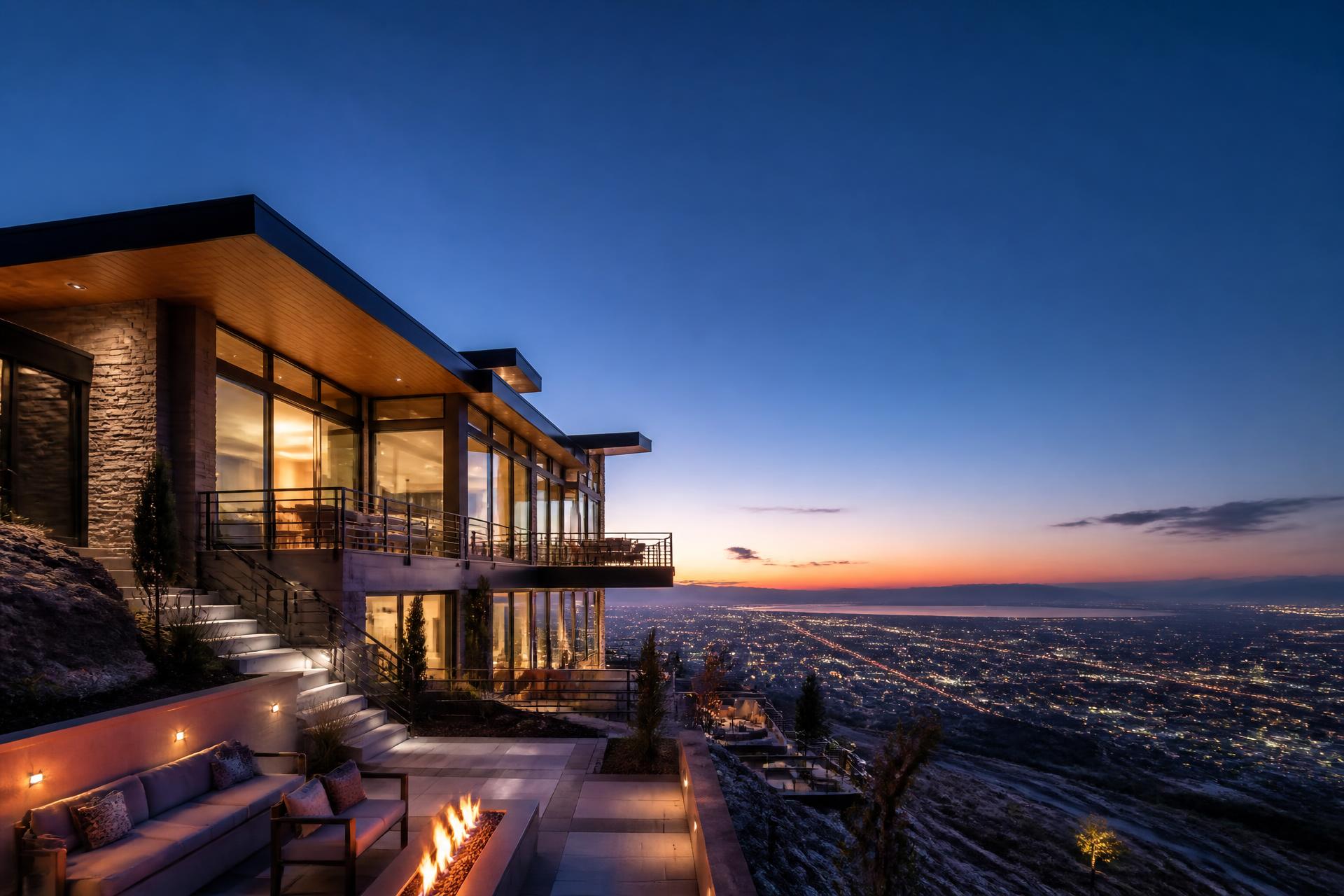
Draper's Next Decade: Growth, the View Premium, and Where the Real Value Sits
Draper has spent the last two decades becoming the place where the Salt Lake Valley's economy and its topography meet. The employment corridor running through the south end of the valley put a large, well-paid, relocating workforce within a short drive of some of the best view lots left in the county. Housing markets respond to that combination for a long time.
What makes Draper different from the other cities in this cluster is that it still has elevation to sell. Holladay is out of land. Cottonwood Heights is close. Draper's bench and hillside neighborhoods, including SunCrest and the terraces stepping east and south, still contain properties where the view has not been fully monetized by the house standing on the lot.
What is fueling demand in Draper?
Employment proximity is the first driver. The technology and financial corridor along the valley's south end has drawn a workforce that arrives with buying power and, frequently, with expectations shaped by other markets. Those buyers care about ceiling height, glass, kitchen function, and outdoor living in ways the local housing stock from the 1990s and early 2000s does not always anticipate.
Access is the second. Draper connects north into the valley and south into Utah County without either commute being unreasonable, which widens the buyer pool considerably. A household with one job in Lehi and one in Salt Lake City has a very short list of sensible places to live, and Draper is near the top of it.
The third driver is the view itself. Elevation in Draper delivers a valley panorama that reads as a luxury asset in any market. The question is whether a given house is actually collecting it.
Why do so many Draper homes underuse their view?
Because most of them were built when large-format glass was expensive and thermally poor, so the plans hedged. Windows were sized conservatively, the best elevation often got bedrooms rather than living space, and the outdoor room was treated as a bolt-on deck instead of an extension of the floor plan.
That hedge is now the opportunity. Glazing technology has improved enormously, and it is possible to open a west-facing Draper elevation without creating an unlivable afternoon heat load. Doing it correctly requires deliberate design, deep overhangs, correct glass specification, shading that is architectural rather than added later, and mechanical sizing that accounts for the gain. Done casually, a wall of west glass in Draper is a mistake that shows up on every summer utility bill.
The homes that command the strongest prices in the view neighborhoods are the ones where the primary living space, the kitchen, and the covered outdoor room all face the valley and are connected in one continuous move. That is a design decision, and it is worth substantially more than an equivalent spend distributed across finishes.
Which improvements hold their value in Draper?
Anything that converts the view into daily usable living space. In practice that means four things: opening the view elevation with correctly specified glass, building a covered and conditioned outdoor room rather than an open deck, reworking the kitchen and great room into a single volume oriented west, and treating the lower level as living space rather than storage.
Wind matters more than people expect at SunCrest elevations, and it changes deck framing, railing selection, and shade structure design. Snow loads and drift patterns are different up there as well. Those are not reasons to avoid outdoor living, they are reasons to engineer it properly. Our guide to covered decks in Utah explains how a roof structure changes the usable season, and the Draper building guide covers local site conditions in detail.
Is there still room to grow in Draper?
There is more remaining capacity here than in the northern cities of this cluster, and that is a genuine distinction. It means Draper will keep absorbing new households for longer, and it also means an owner improving an existing home is competing with new construction in a way a Holladay owner is not.
The strategic response is to lean into what new construction cannot replicate: the established view lots, the mature landscaping, and the larger parcels in the older bench neighborhoods. A thoughtfully rebuilt home on an established view lot beats a new home on a smaller lot with a partial view almost every time, and the market prices it that way.
Talk it through
If you own a Draper property with elevation, the highest-value first step is a design overview focused on the view elevation, the sun exposure, and whether the existing structure can carry the openings you want. That conversation usually reframes the budget conversation entirely.
Modern International Builders
Utah's premier custom home builder, specializing in luxury residences throughout Park City, Alpine, Highland, and Draper. With over 20 years of experience, we transform visions into exceptional living spaces.
Learn more about our team →