Why Holladay Keeps Getting More Valuable: Growth, Land, and the Case for Building Here
The most useful thing to understand about Holladay is that it is finished. Not declining, not stalling, finished in the sense that there is no meaningful greenfield left inside the city. Every new home built in Holladay from this point forward will replace or transform something that already exists. Markets that reach that stage behave differently from markets that are still expanding, and understanding that difference is the whole investment case.
When a city runs out of land, price stops being set by the cost of construction and starts being set by the scarcity of the location. New supply cannot arrive to relieve demand. The only way to add value is to improve what is standing. That is why the strongest returns in Holladay over the last decade have not come from buying and holding, they have come from buying the right lot and putting a better house on it.
What is actually driving Holladay's growth?
Holladay sits at the center of everything the Salt Lake Valley has spent twenty years building outward to find. It is minutes from downtown Salt Lake City, minutes from the mouths of Big and Little Cottonwood Canyons, and inside a school and services footprint that families rank ahead of almost anything else. Nothing about that position is new. What is new is how much the alternatives cost in time.
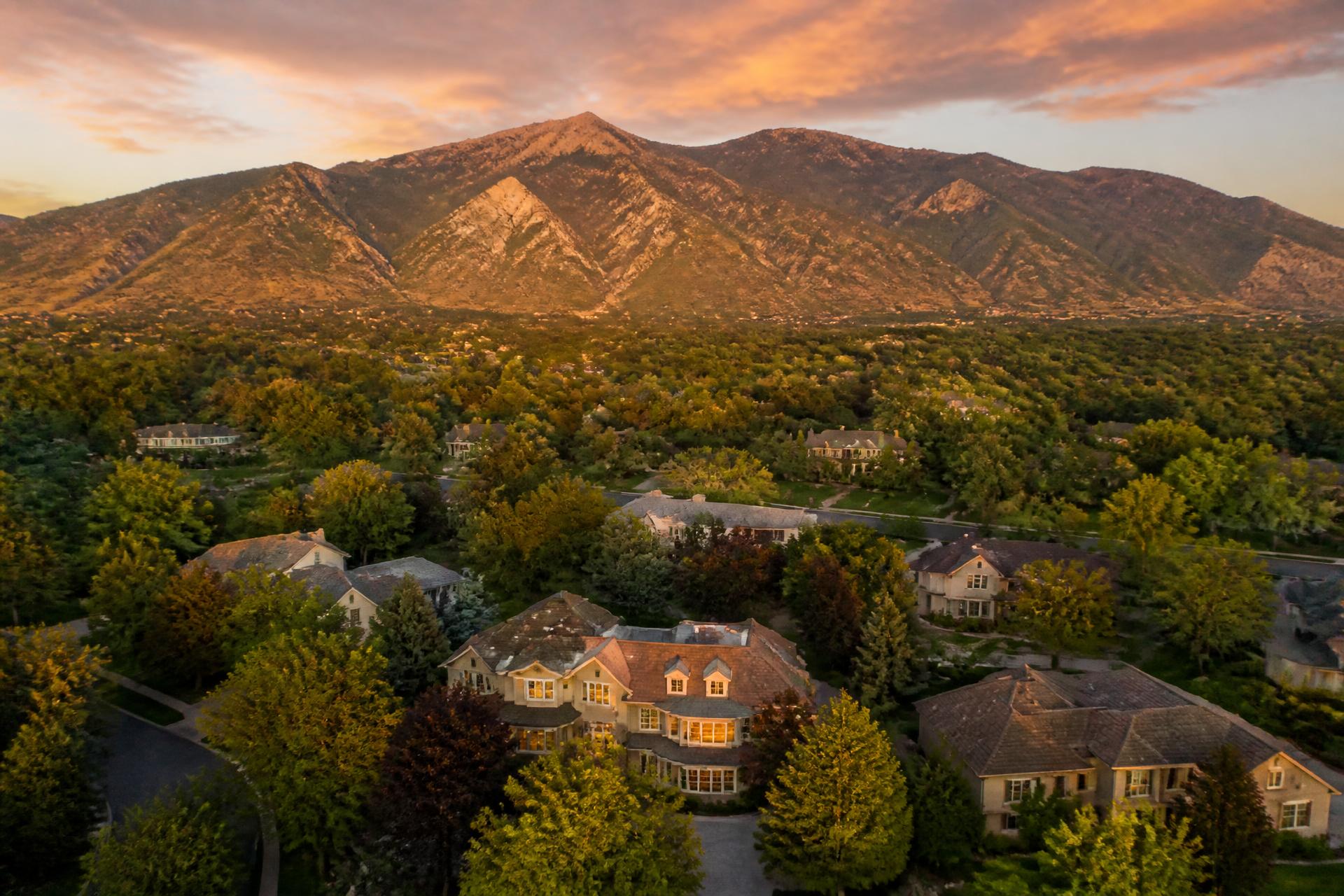
Growth in Utah has pushed households further and further from the center of the valley. As commutes lengthened and the outer suburbs filled in, central addresses with large lots became genuinely rare. A half acre in Holladay is not comparable to a half acre in a newer master-planned community forty minutes south. It carries a location that cannot be reproduced, a tree canopy that took seventy years to grow, and a street pattern that was never designed for density.
The second driver is demographic. The generation that built and occupied Holladay's postwar housing stock is turning over its homes. Those properties are moving to buyers who have no intention of living in a 1962 floor plan. That turnover is the engine of the market, and it is why so much of what happens in Holladay now is a rebuild or a deep remodel rather than a simple resale.
Why does the land matter more than the house?
In most of Salt Lake County the improvement carries the value and the land is a fraction of the total. In Holladay that ratio is often inverted. Buyers are paying for a lot, a canopy, a location, and a school boundary, and the structure sitting on it is frequently the least valuable part of the transaction.
That inversion has a direct consequence for anyone thinking about a project here. When the land carries the value, the risk of over-improving is dramatically lower than it would be in a market where the house sets the price. A well-designed home on a Holladay lot is supported by the ground underneath it. The same house built forty minutes away is not.
It also means the design has to earn the lot. A stock plan dropped onto an irregular Holladay parcel wastes the very thing the owner paid for. Mature trees get removed because the driveway was drawn before the site was surveyed. The best light on the property ends up behind a garage wall. The view of Mount Olympus is framed by a bathroom window. Those are not aesthetic complaints, they are value losses, and they are permanent.
Is it better to remodel or rebuild in Holladay?
The decision comes down to three physical facts about the existing house: the condition of the foundation, the main-level ceiling height, and the roof structure. Those determine whether a remodel can deliver the home an owner actually wants or whether it will produce an expensive compromise.
Remodels win when the existing footprint is generous, the plate height can carry a modern great room, and the foundation can accept new loads. In that scenario the budget goes into the rooms the owner touches daily, structural openings, new glass on the good elevation, a primary suite carved from small bedrooms, and a lower level that becomes real living space.
Rebuilds win when the constraints stack. Low plates that cannot be raised economically, a foundation that will not carry a second story, and a roof structure that has to come off anyway. When three of those are true, the remodel becomes a series of workarounds and the owner spends rebuild money for remodel results. We resolve that question during design, before anyone commits, which is exactly what our design-first process exists to do. For the detailed local guide, see our piece on custom homes and remodels in Holladay.
Where does the value concentrate inside Holladay?
Olympus Cove trades on elevation and view. Lots on the bench capture the valley to the west and sit against the mountain to the east, and homes that were designed before large-format glass was affordable are systematically underusing what they own. Opening those elevations is the single highest-leverage move available on that side of the city.
The Cottonwood Lane corridor and the pockets east of Highland Drive trade on lot size and canopy. Here the leverage is different. It is about the relationship between the house and the yard, covered outdoor living that extends the usable season, and a floor plan that finally opens to the back of the property instead of turning its back on it.
In both cases the pattern is the same. The land is already doing its job. The house usually is not.
What should an owner do now?
Start with the site, not the wish list. A survey, a structural walk, and a first set of study drawings will tell you more about your options than months of browsing plans. In a land-constrained market the correct sequence is always the same: understand what the property can support, then decide how much house to build, then set the budget honestly against that answer.
The owners who do well in Holladay are the ones who treat the lot as the asset and the house as the instrument. The ones who struggle are the ones who bought a plan first and tried to make the land agree with it afterward.
Talk it through
If you own a Holladay property or you are evaluating one, a design overview will tell you quickly whether the right move is a remodel, an addition, or a rebuild, and roughly what each path costs. There is no obligation attached to that conversation.
Modern International Builders
Utah's premier custom home builder, specializing in luxury residences throughout Park City, Alpine, Highland, and Draper. With over 20 years of experience, we transform visions into exceptional living spaces.
Learn more about our team →