How Much Does a Heated Driveway Cost in Utah?
Quick answer
Market ranges for a heated driveway run about $12 to $28 per square foot installed, so a 1,000 sq ft driveway typically lands between $12,000 and $28,000. Hydronic systems cost 30 to 50 percent more upfront than electric but are usually cheaper to run through a Utah winter.
For base construction bands and an all-in planning range, use our Utah custom home cost estimator and 2026 cost index.
A heated driveway in Utah typically costs $12 to $28 per square foot installed, based on 2026 national cost data from HomeGuide and Angi. For a common 1,000 square foot driveway, that puts the market range at roughly $12,000 to $28,000 before any tear-out of existing concrete. The system type, the surface you pour or lay over it, and whether you are building new or retrofitting move the number more than anything else.
This guide breaks down installed cost, totals by size, what it costs to run a system through a Utah winter, retrofit options, maintenance and permits. Every figure is a researched market range, not a quote.
What does a heated driveway cost per square foot?
Market ranges for installed cost per square foot run as follows, according to HomeGuide and Angi 2026 national data:
- Hydronic (heated fluid in PEX tubing): about $12 to $28 per sq ft installed.
- Electric (resistance cable or mats): about $12 to $27 per sq ft installed.
- Heated pavers: about $19 to $50 per sq ft, because the paver surface itself costs more than poured concrete or asphalt.
The two ranges overlap, but on a like-for-like driveway a hydronic system typically runs 30 to 50 percent more upfront than electric. The difference comes from the boiler, manifold, pump and glycol loop that electric systems do not need. In return, hydronic systems are generally cheaper to operate, which matters in a state where a driveway may run through dozens of storms a season.
These are national figures. Utah labor, material pricing and access conditions at the time you build will push a specific project toward one end of the range or the other.
How much does a heated driveway cost by size?
Applying the $12 to $28 per square foot market range to typical driveway sizes gives these planning totals:
| Driveway size | Typical installed range |
|---|---|
| 500 sq ft | $6,000 to $14,000 |
| 1,000 sq ft | $12,000 to $28,000 |
| 2,000 sq ft | $24,000 to $56,000 |
Long mountain driveways, wide motor courts and steep approaches sit at the larger end of that table. Many owners heat only the tire tracks, the steepest section or the apron near the garage to bring the total down. Partial heating changes the square footage, so it changes the budget in direct proportion.
Hydronic or electric: which makes more sense in Utah?
The choice usually comes down to upfront cost against running cost, and to what else the home needs.
Hydronic snowmelt
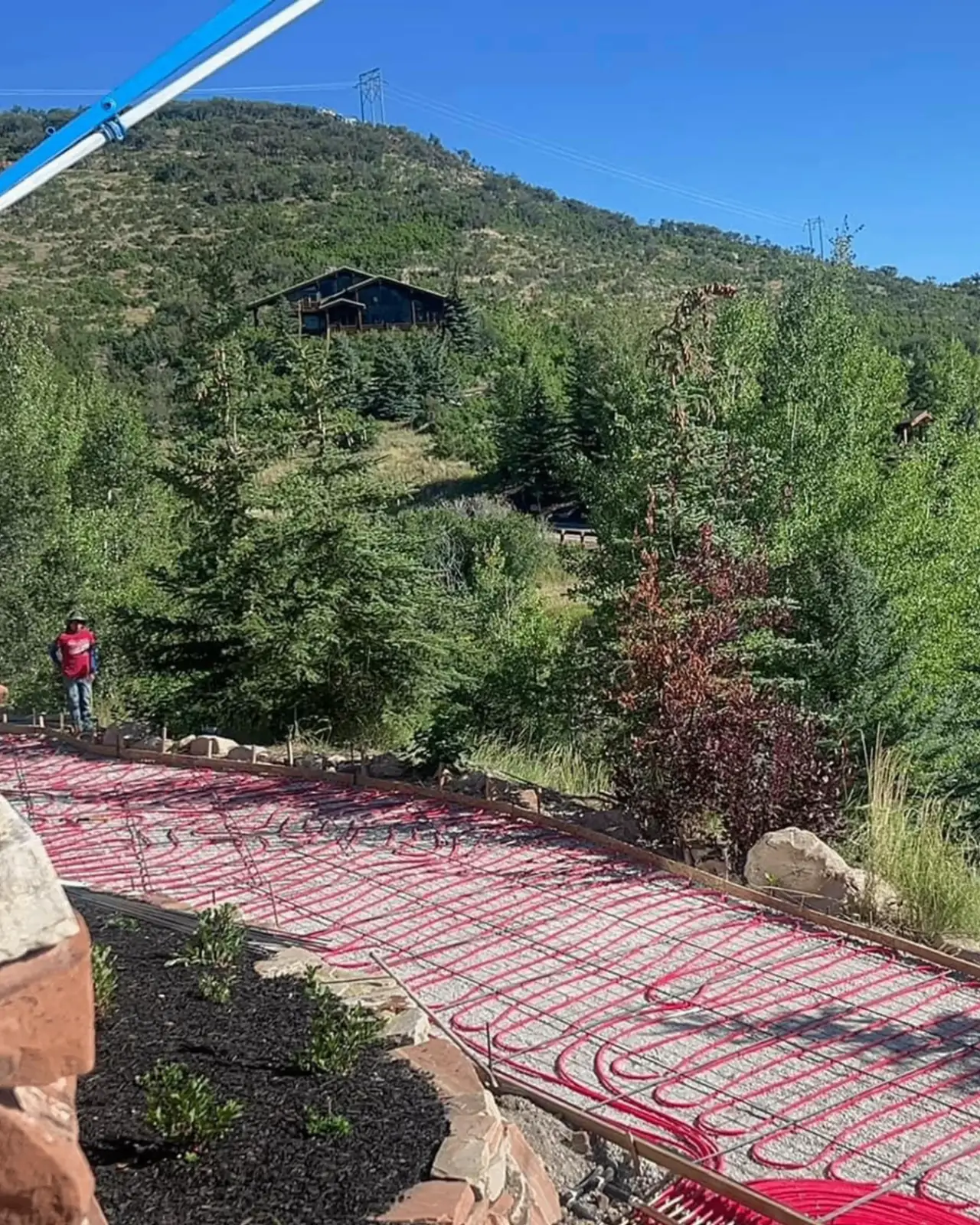
A hydronic system circulates a heated glycol mix through tubing embedded in the slab. It costs more to install because it needs a heat source, typically a gas boiler, plus pumps and a manifold. It tends to cost less to run per storm, and it can share mechanical planning with radiant floors or other hydronic loads in a new custom home.
Electric snowmelt
An electric system uses resistance cable or mats in the slab or under pavers. It is simpler to install, has fewer moving parts and needs no boiler room space. It costs more to run, and larger areas may require additional electrical capacity at the panel.
As a rule of thumb, smaller areas and retrofits lean electric, while large driveways on new construction lean hydronic. The right answer depends on gas availability, panel capacity and how often you expect the system to run.
How much does a heated driveway cost to run each winter?
Market estimates for seasonal running cost, per 1,000 square feet, are roughly:
- Hydronic: about $120 to $250 per winter.
- Electric: about $250 to $600 per winter.
Per storm, the difference is easier to see. At Rocky Mountain Power's residential rate of roughly 13.4 cents per kWh, an electric system running for an 8-hour storm costs about $40. A gas-fired hydronic system running for the same storm costs about $9, plus whatever it uses idling to keep the slab ready.
Seasonal totals depend on how many storms you get. Park City and other high-elevation areas see more snow events than the Wasatch Front, so seasonal totals there run higher than the ranges above. Automatic snow and temperature sensors that start the system only when it is needed are the main way owners keep running costs in check.
Can a heated driveway be added to an existing driveway?
Yes, in two main ways, and the cost differs sharply.
- Tear out and replace: removing the existing driveway typically adds $1 to $3 per sq ft on top of the installed system cost. This is the cleanest result and works with either system type.
- Saw-cut retrofit: grooves are cut into existing concrete and electric cable is set into them. Market ranges run about $7 to $17 per sq ft. It avoids a full tear-out but depends on the existing slab being in good condition.
For a new custom home, the lowest-cost moment to add snowmelt is before the driveway is poured, when tubing or cable can go in with the base work and the boiler or electrical capacity can be planned with the rest of the house.
What about heated steps, walkways and patios?
For entry stairs, heated stair mats typically run about $55 to $100 per step. They are a common way to add snowmelt to an existing stair without rebuilding it.
Embedded walkway and patio heating uses the same system types as driveway snowmelt and is priced similarly per square foot. Smaller areas, detailed edges and stair geometry change labor and material costs, so the driveway market ranges are a planning reference rather than an identical price for every surface.
What maintenance does a heated driveway need?
Electric systems have few serviceable parts beyond the controls and sensors. Hydronic systems need routine attention, according to guidance from Watts and Angi:
- Glycol: checked yearly and flushed or replaced about every 5 to 7 years.
- Circulation pumps: typically last about 10 years before replacement.
- Boiler: serviced annually.
Budget for these as ongoing costs alongside fuel or electricity.
How long does a heated driveway last?
Embedded tubing and cable are built to last the life of the paving. The serviceable parts are the pump, boiler and controls; hydronic systems also need periodic glycol replacement. Plan for access to those components and routine maintenance rather than treating the entire system as maintenance-free.
Does a heated driveway need a permit in Utah?
A heated driveway needs an electrical permit for the wiring, and a mechanical or plumbing permit as well for a boiler-based hydronic system. As a market planning allowance, budget a few hundred dollars and a couple of weeks for the permit itself; this is not a city fee quote or a guaranteed review time. Current fees and requirements are on Park City's building permit page.
Snowmelt systems are required to have automatic controls, and the thresholds are set by code: the system has to shut itself off once the pavement is above 50°F with nothing falling, and there has to be a control that shuts it down when the outside temperature is above 40°F. This is why a properly controlled system does not run all winter, and it is the single biggest factor in what it actually costs you to operate. It is also the reason the seasonal running costs quoted above stay as low as they do; anyone who assumes the system runs continuously will badly overestimate the bill. See Utah's official energy code resource for the current requirements. HOA covenants can also govern heated outdoor areas.
What should you decide before pricing a heated driveway?
- Which areas need heat: full driveway, tire tracks, steep sections, walks or stairs.
- Hydronic or electric, based on gas availability, panel capacity and expected use.
- The finished surface: concrete, asphalt or pavers.
- New installation or retrofit, and the condition of any existing slab.
- Controls: automatic snow and temperature sensing versus manual activation.
With those decisions made, a project-specific number becomes possible. Without them, any figure is a market range.
Sources
- HomeGuide, heated driveway cost guide (2026, national data)
- Angi, heated driveway cost guide (2026, national data)
- Rocky Mountain Power, Utah residential rate (approximately 13.4 cents per kWh)
- Watts, radiant snowmelt maintenance guidance
- Park City, building permits and inspections
- Utah, adopted energy code and automatic snowmelt controls
Modern International Builders
Utah's premier custom home builder, specializing in luxury residences throughout Park City, Alpine, Highland, and Draper. With over 20 years of experience, we transform visions into exceptional living spaces.
Learn more about our team →