What a Luxury Remodel Costs in Park City: Altitude, Labor, and the Logistics of Snow Country
Ask a Park City homeowner what a remodel should cost and you will usually get a number borrowed from somewhere else, a friend's project in Salt Lake, a figure from a national renovation index, a bid from a valley contractor who has never built above seven thousand feet. None of those numbers translate cleanly. Park City is not a more expensive version of the valley. It is a different construction environment, with its own labor economics, its own logistics, and its own calendar, and each of those factors shows up in the budget before a single finish is selected.
The homeowners who plan well for a Park City remodel are the ones who understand these variables early, not the ones who simply allocate more money. A well-run project in this market spends its premium on the right things, structure sized for real snow load, a schedule that respects the mountain's working season, and a crew that already knows how to build here. This article walks through where the money actually goes and why the least expensive bid is rarely the most economical decision over the life of the home.
Why does a Park City remodel cost more than a comparable project in the valley?
A Park City remodel costs more because three separate forces stack on top of each other: altitude changes what has to be built, a tighter labor pool changes what it costs to build it, and a shorter outdoor season changes how quickly it can be built. None of these forces are optional add-ons a homeowner can decline. They are built into the site itself.
Altitude affects structure, materials, and mechanical systems in ways that are invisible on a finished wall but very visible on an invoice. Snow load requirements above seven thousand feet are substantially heavier than valley code, which means larger framing members, deeper footings, and engineering review that a Lehi remodel never triggers. Materials specified for UV stability and freeze-thaw cycling at elevation often cost more than their valley equivalents, and using the wrong ones is a false economy that shows up as callbacks within a few winters.
Labor is the second force, and it is often the one owners underestimate most. Skilled trades in Summit County are in high demand relative to supply, split between second-home construction, hospitality projects, and the general growth of the resort economy. Crews with genuine mountain building experience, meaning they understand snow staging, frost depth, and how a Park City inspector reviews a remodel, are worth the premium they command. A crew without that experience is not actually cheaper. It is a different, riskier project wearing a lower number.
How does the construction season limit what a Park City remodel can accomplish in a year?
The construction season in Park City limits the window for exterior and structural work to roughly seven or eight months in a typical year, and a remodel that misses that window loses an entire season rather than a few weeks. This is the single biggest scheduling difference between building here and building in the valley, and it has a direct cost consequence.
Foundation work, framing that opens the building envelope, and any exterior structural change need to happen while the ground is workable and the site is accessible to equipment. Deep snowpack does not just slow a job site, it can close it entirely, and a project that breaks ground too late in the fall risks sitting exposed and unprotected through a winter it was never designed to weather. A design-first builder sequences the remodel so the most weather-sensitive work happens first, interior finish work continues through the winter months, and the home is closed in before the season turns against it.
This is also why the planning phase in Park City has to start earlier than most owners expect. Design, permitting, and design review approval all need to be resolved before the workable season begins, because a remodel that is still in design review in May has already lost several weeks of the year it can safely build outdoors. We cover the review process itself in navigating Park City design review and permits for a remodel.
What role does site access and logistics play in the cost of a Park City remodel?
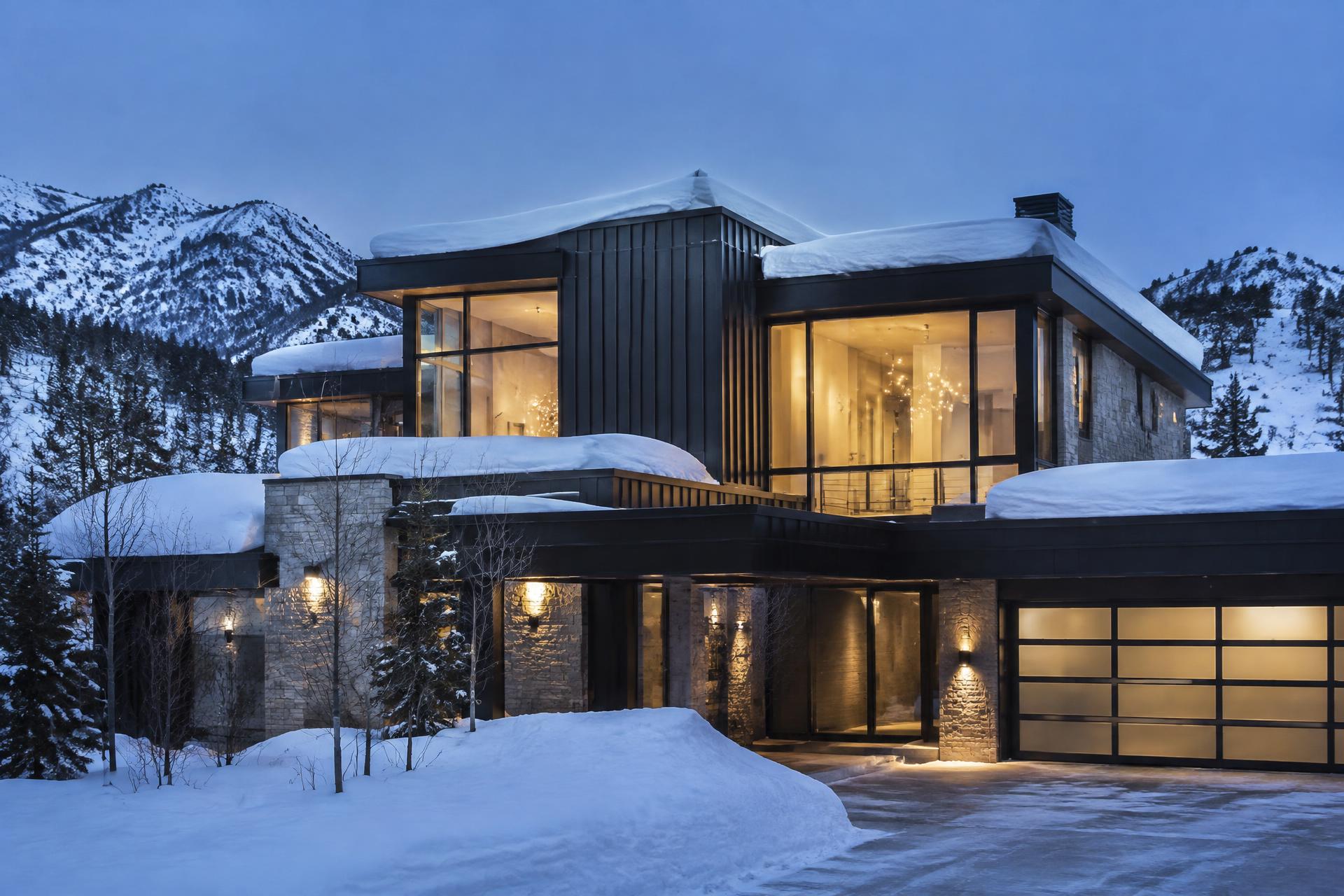
Site access adds real cost to a Park City remodel because many of the homes in this market sit on steep lots, narrow mountain roads, or private drives that were never designed for construction traffic. Delivering materials, staging equipment, and simply parking a crew's vehicles can require solutions a valley project never needs.
A remodel on a ridge lot in Deer Valley or a canyon property off a switchback road may require smaller delivery vehicles making more trips, temporary staging areas negotiated with a neighbor or an HOA, or crane placement planned weeks in advance because there is no room for a standard boom truck to maneuver. Each of these adjustments has a line-item cost, and each is far cheaper when it is planned during design than when it is discovered on the first day of framing.
Winter access compounds the issue for any remodel that carries interior work into the snow months. Snow removal from the drive and staging area becomes a recurring cost, and a builder who has not planned for it will either absorb the delay or pass along the expense mid-project. This is one of the reasons a concierge approach to project management matters so much for owners who are not on-site daily, a topic we explore fully in remodeling a Park City second home.
Does building at elevation actually change the materials and systems specified in a remodel?
Yes, building at elevation changes the specification of nearly every exterior material and several interior systems, and treating a Park City remodel as though it were a valley project with a mountain view is where many cost overruns begin. Roofing, siding, decking, windows, and mechanical equipment all perform differently above seven thousand feet than they do in Lehi or Draper.
Roofing systems in Park City need to manage snow load and ice damming in ways that a lower-elevation roof does not, and the difference between an adequate roof and a correct one shows up as ice buildup, leaking, and premature wear within a handful of winters. Windows and doors specified for altitude perform better against pressure differentials and temperature swings that widen considerably as elevation increases. HVAC systems have to be sized for how thin air affects combustion appliances and equipment efficiency, a calculation most valley HVAC contractors never make because they never need to.
Outdoor living spaces face the same recalibration. A deck built to valley snow load standards will underperform quickly in Park City conditions, which is why the structural design of any outdoor addition should be resolved alongside the remodel rather than treated as an afterthought. We cover that specification discipline directly in our article on building a custom deck in Park City.
Where do Park City remodel budgets get spent well, and where do they get wasted?
A Park City remodel budget is spent well when it prioritizes structure, building envelope, and mechanical systems sized for altitude, and it is wasted when it is front-loaded into finishes selected before those fundamentals are resolved. The homes that hold their value in this market are the ones where the unglamorous decisions were made correctly first.
Owners frequently want to see budget go toward visible finishes early, cabinetry, stone, lighting, because those are the decisions that feel like progress. But a remodel that spends generously on finishes while underfunding the structural and mechanical scope produces a home that looks finished and performs poorly, developing problems that cost far more to correct after the walls are closed than they would have cost to address during design.
A design-first approach reverses this instinct. The structural engineering, the envelope detailing, and the mechanical sizing are resolved first, funded appropriately, and only then does the conversation move to the finishes a homeowner actually sees every day. That sequencing does not mean sacrificing design quality. It means the design quality is built on a foundation that will still be performing correctly in fifteen years.
How should an owner plan a remodel budget for a Park City home?
An owner should plan a Park City remodel budget with meaningful contingency built in from the start, not added later when a surprise appears. Between altitude-driven specification, a compressed working season, and site access complexity, this market produces more legitimate unknowns than a comparable valley remodel, and a budget that assumes a valley-level contingency is almost always thin.
It also helps to plan the schedule around the season rather than around a preferred move-in date. A remodel timed to break ground as the snow clears and to close in the envelope before the following winter will generally run more efficiently and more predictably than one that fights the calendar. That planning discipline is where a design-first builder earns its fee, translating the realities of the site and the season into a sequence that protects both the budget and the finished result. Our full approach to sequencing a project is described in our build process, and the scope of what a luxury remodel involves from design through completion is outlined on our remodeling services page.
Frequently asked questions about Park City remodel cost
Is a Park City remodel always more expensive than the same project in Salt Lake or Utah County?
In most cases, yes, largely because of altitude-driven structural requirements, a tighter skilled labor market, and a compressed outdoor construction season. The gap varies by scope and site, but owners should plan for a real premium rather than treat Park City pricing as a negotiable markup on valley numbers.
How far in advance should a Park City remodel be planned?
Design and design review approval should generally begin well before the workable construction season, often the fall or winter before the intended start, so that ground-disturbing and envelope work can begin as soon as the site is accessible. Starting design in spring frequently means losing that year's building window entirely.
Can interior remodel work continue through a Park City winter?
Yes, once a home is closed in, meaning the roof, windows, and exterior envelope are complete, interior finish work can and often does continue through the winter months. This is one of the reasons sequencing the exterior scope ahead of the snow is so important to keeping the overall schedule on track.
What is the biggest hidden cost owners underestimate in a Park City remodel?
Site logistics is the most commonly underestimated cost, including material delivery on narrow or steep access roads, equipment staging, and winter snow removal from an active job site. These costs are manageable when planned during design but expensive when discovered mid-construction.
Modern International Builders
Utah's premier custom home builder, specializing in luxury residences throughout Park City, Alpine, Highland, and Draper. With over 20 years of experience, we transform visions into exceptional living spaces.
Learn more about our team →